SELECTED PRESS
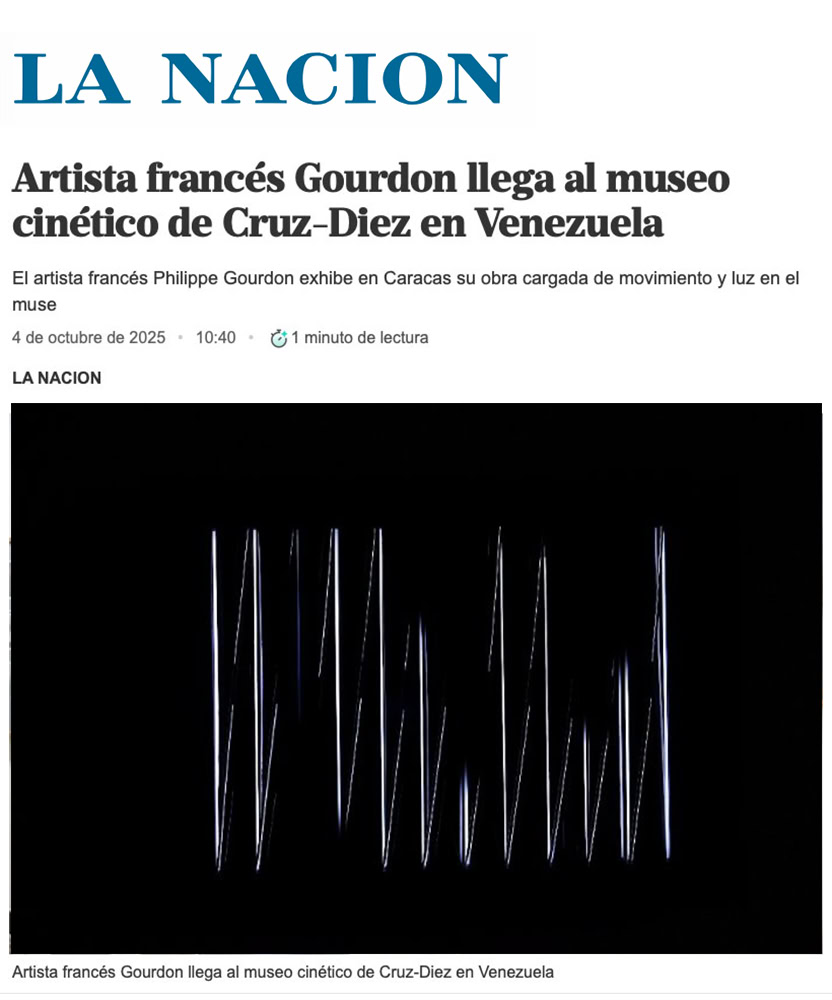
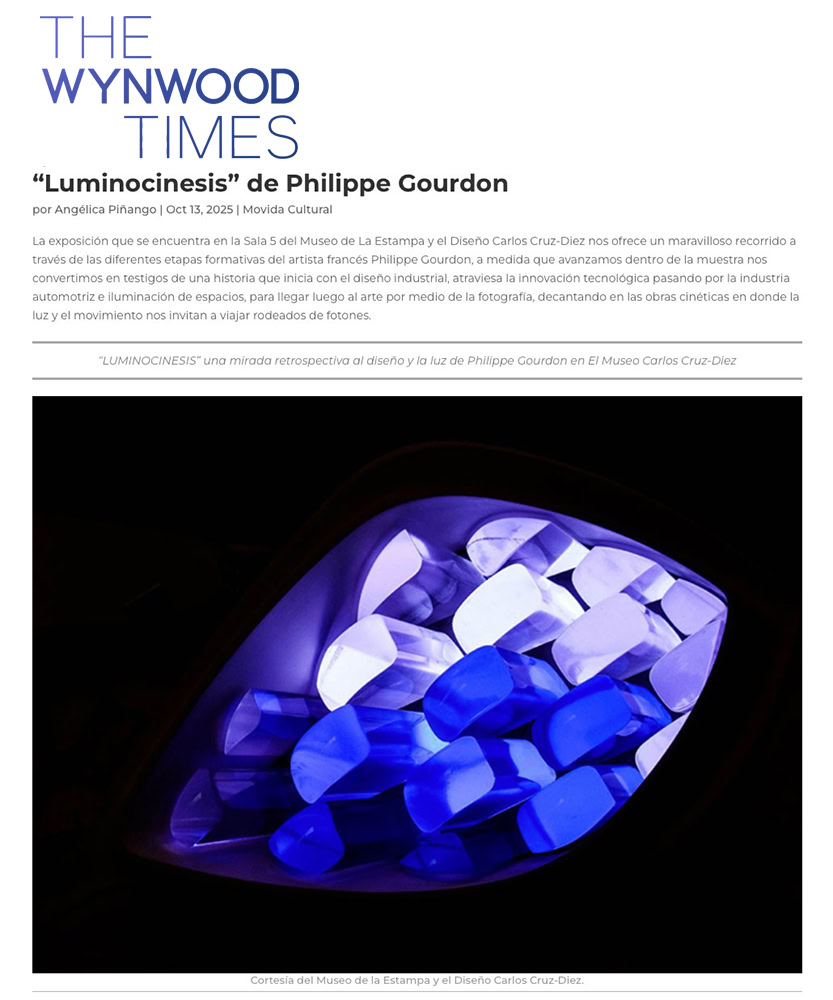
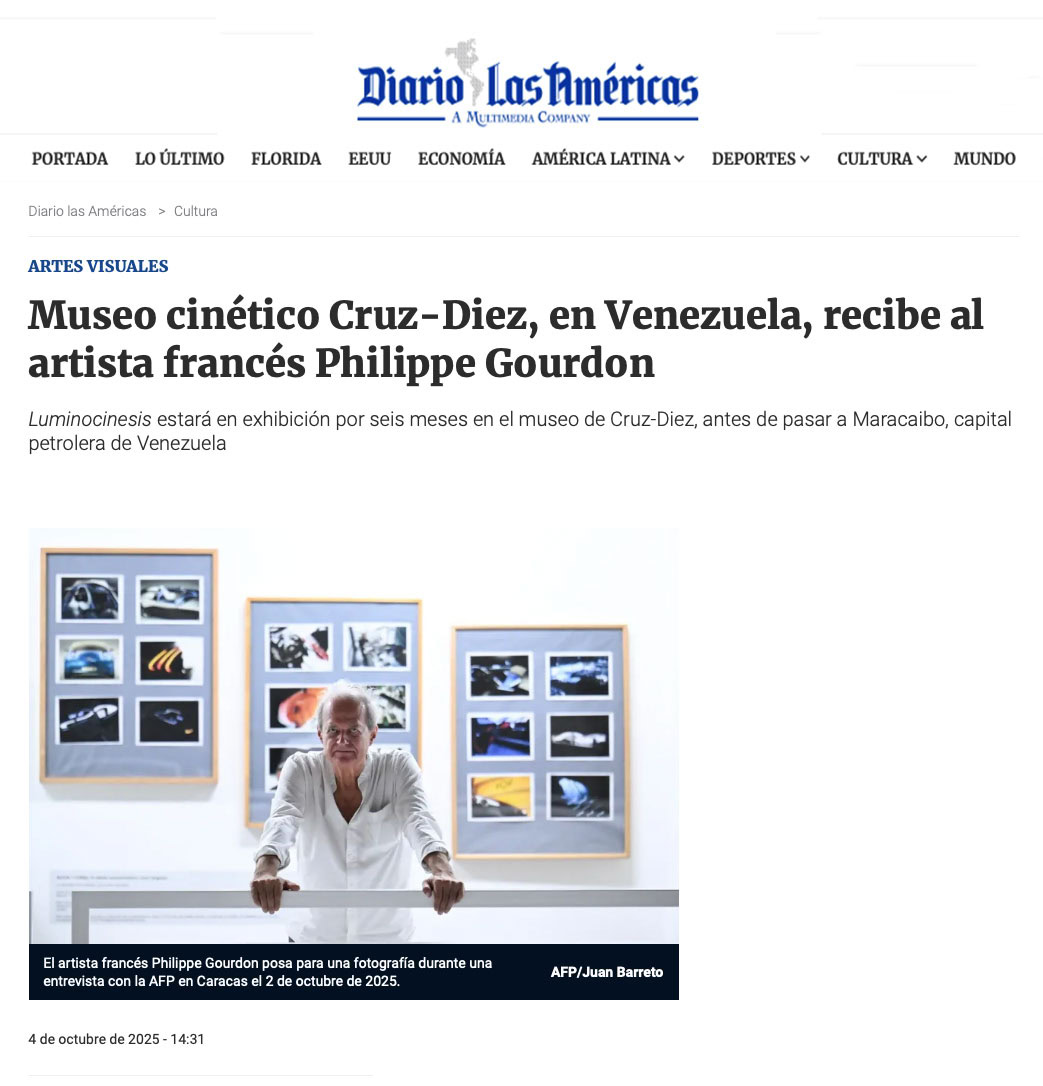
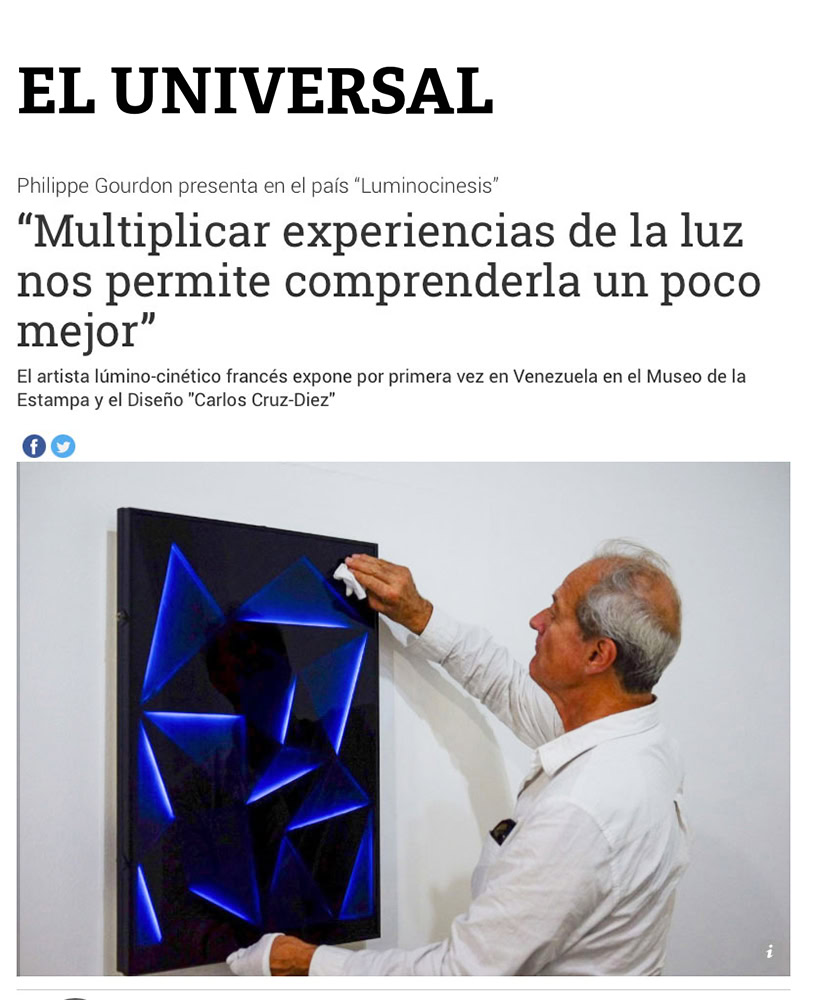
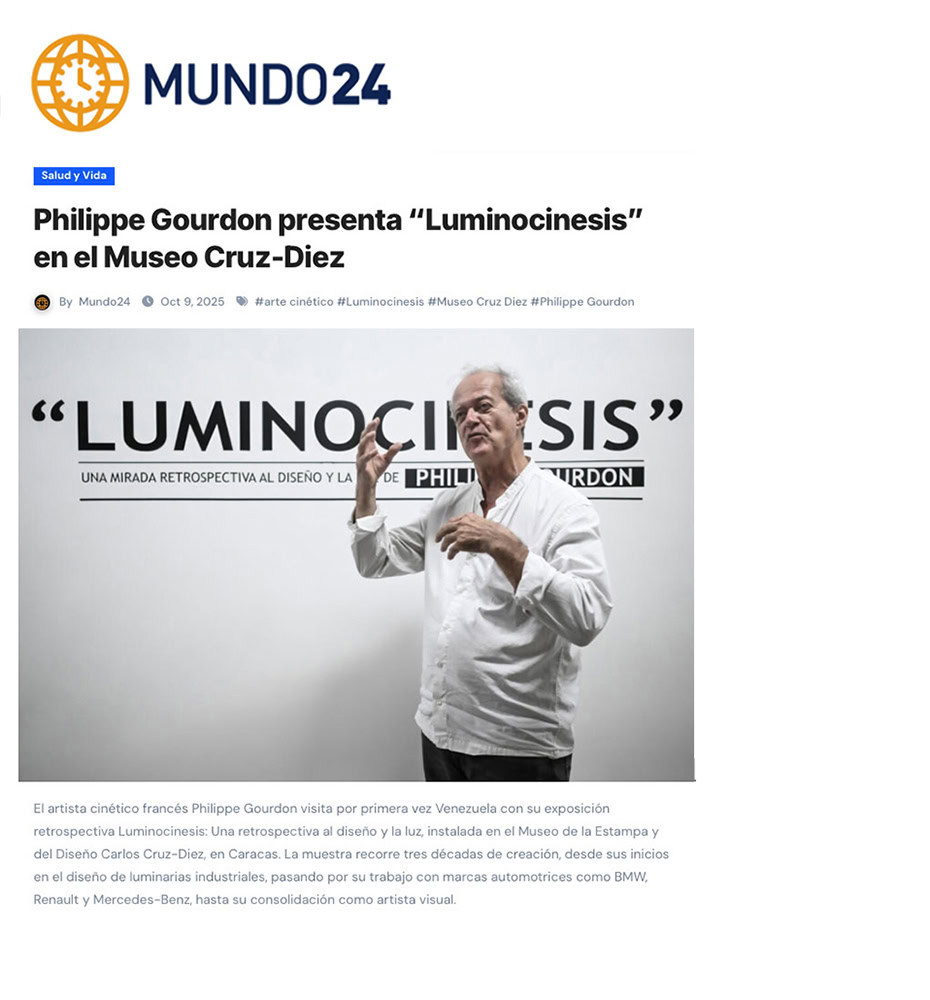
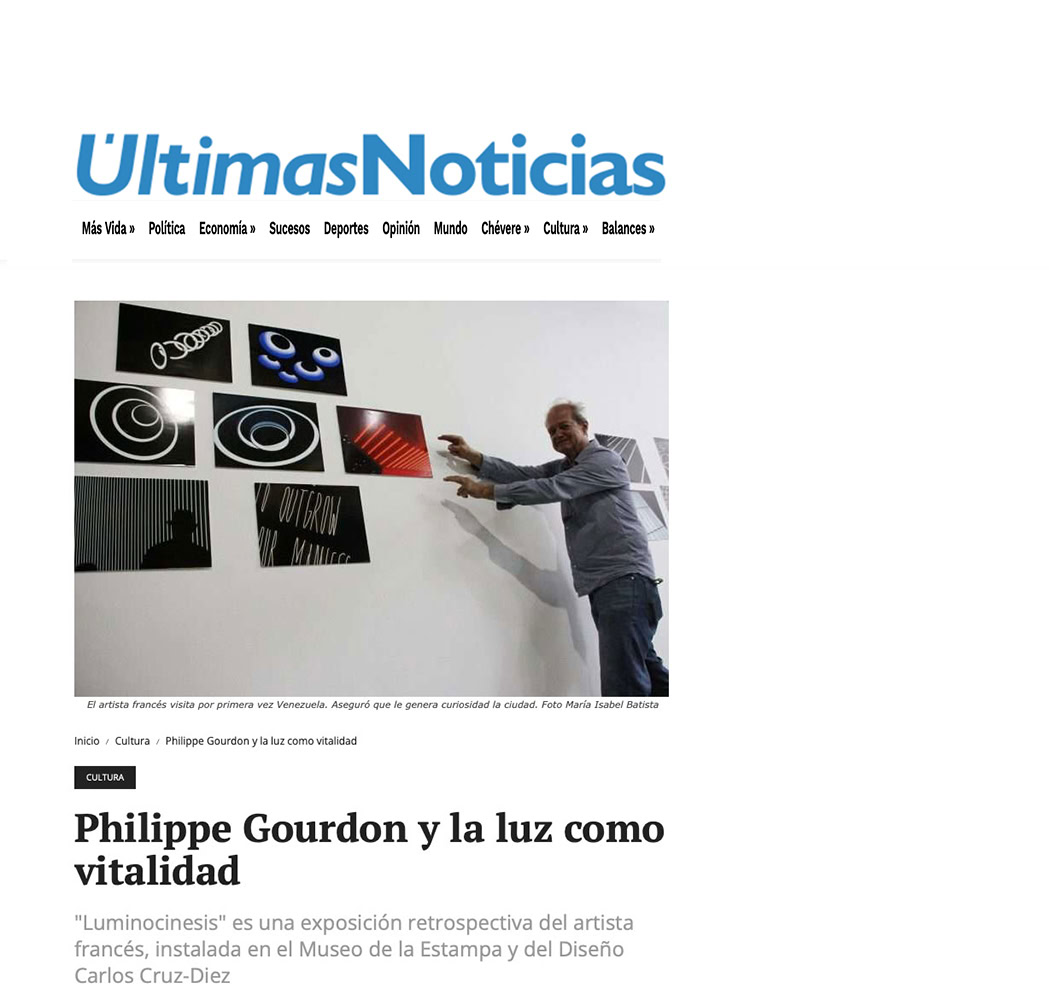
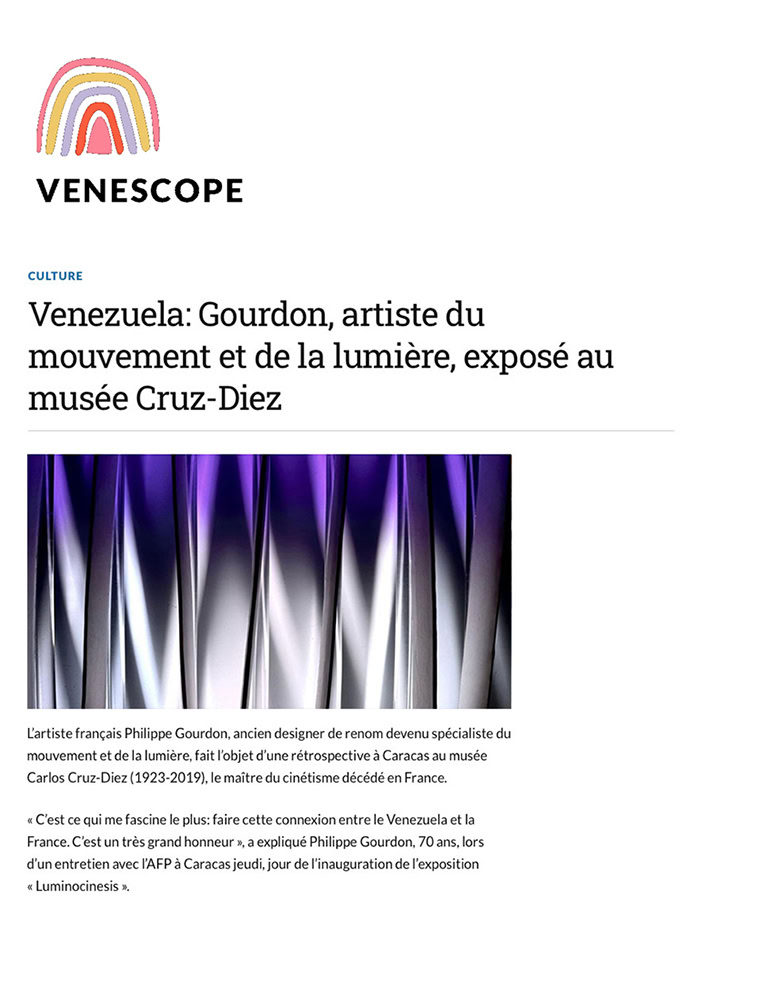
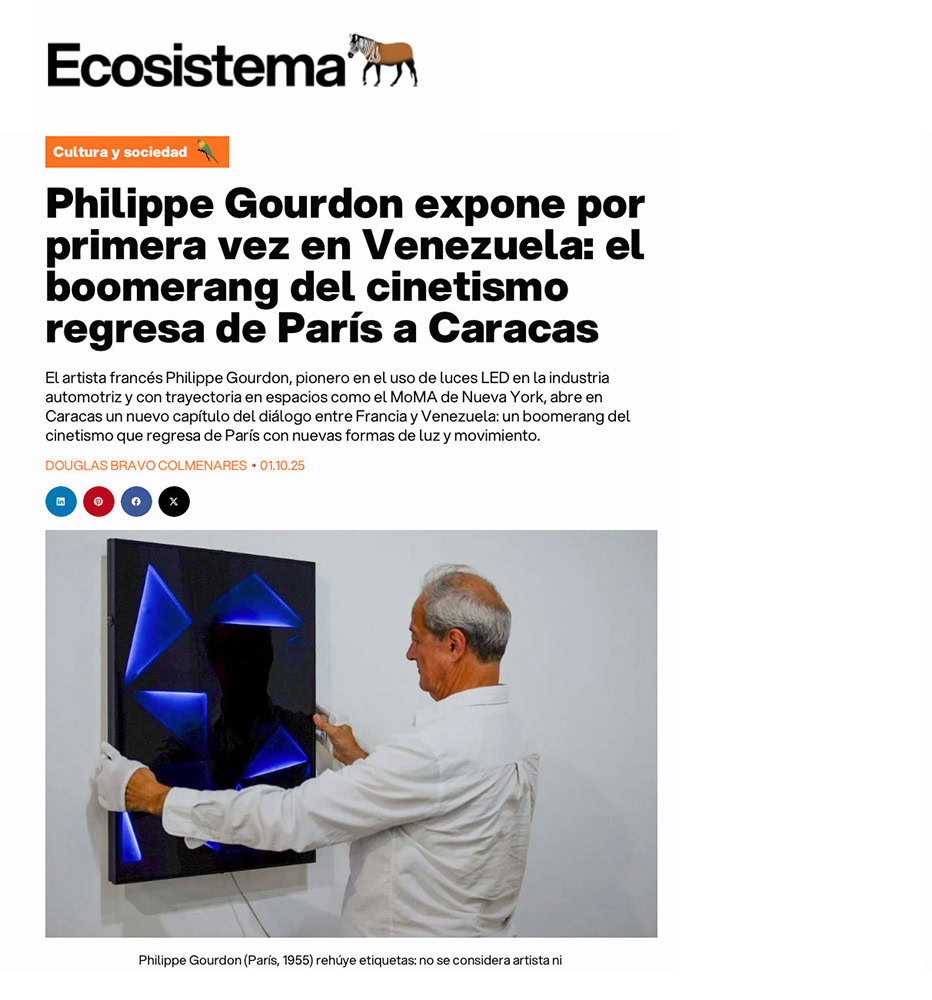
Museo Carlos Cruz-Diez — “Luminocinesis”
Solo exhibition, Caracas , October 2025–March 2026.

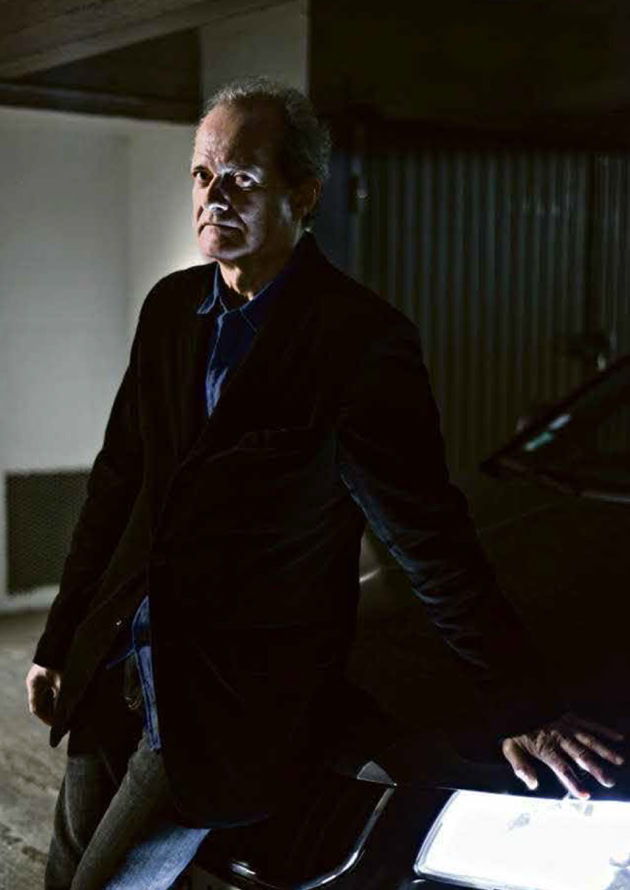
THIS PASSIONATE DESIGNER GIVES CARS A SOUL BY CREATING THEIR LUMINOUS IDENTITY

f every idea gives rise to a new spark, then Philippe Gourdon must be the source of the Milky Way. This “designer of light,” as he calls himself, invents and creates at breakneck speed. Talking to him is like playing with a dimmer: ideas come in a rush and his pace of speech quickens.
We are close to a spiritual experience.“Today, designers are very young and sometimes lack cultural grounding, which leads to a loss of confidence. The proof? They overdo it. The formal complexity of new models stems from that. It is easy to make something, but harder to make it simple. The Japanese are good at this. Volvo also deserves credit: its classic forms are very elegant.”
Working with light adds a further spatial dimension. It involves the choice of forms, materials, colours and ergonomics.“It is no longer an accessory; it is a necessity. Everyone is sensitive to it, just as they are to sound quality.”To reconcile lighting with functionality and well-being, Philippe Gourdon has taken hold of light: he has examined it, shaped it, felt it, tamed it, and made it soft or powerful.
“Elegant lighting creates a sense of well-being. Warm, subdued light brings a feeling of harmony to a vehicle. You feel almost at home.”
Would his role as an industrial designer therefore be to meet needs while distinguishing himself from the competition through innovation? Not so simple. Trends, consumer behaviour and technological advances must all be taken into account when designing the equipment of the future.
Regarded as the inventor of a new profession in the automotive world, this passionate man is at once a designer, engineer, decorator and psychologist. He combines all these disciplines to illuminate and transform the world.
DESIGN. His career as a lighting designer began fifteen years ago with Citroën. The hardest part, he recalls, was convincing the manufacturers.
“The automotive world is ambiguous: traditionally very closed, but it has gradually opened up. Proof of this is that it took them ten years to start going to the Milan Fair. I have been going for twenty years. Now they go there to communicate and to see what others are doing.”
With every new model launch, the commercial stakes are so high that a single sketch has to win people over at first glance — enough to paralyse more than one creative mind.
“I am passionate about photography and I witnessed the birth of digital technology. At first, there were revolutionary camera-body concepts. That is over now: they all look like the old SLR camera,” he regrets. “People love new technologies, but they also want reassurance. With cars, that may explain the success of the Germans: they innovate while retaining the same design language.”
His Professor Nimbus appearance is misleading. Behind it lies a formidable creator. Philippe Gourdon is an outsider in the automotive landscape, a sponge that absorbs trends and flashes of innovation, then returns them transformed. Creating a soul for a metal box is no easy task.
“We invent lighting scenarios.” Distributed throughout the cabin, they bring a touch of freshness. Cool LED lighting can influence your mood and help you feel energised. With warm LEDs, the atmosphere becomes one of comfort and luxury.
LIGHT THERAPY. For Gourdon, light may also have medical applications.“The car has become frustrating; reduced speed limits and lower engine power are the reason. Imagine if the time we spend in our vehicle could regenerate our cells. From a marketing perspective, light therapy has powerful potential.”The latest innovation is OLED lighting, which can be used to create television screens — ideal for displaying information wherever it is needed. Put simply, LEDs are point light sources, while OLEDs are surface light sources. The next developments Philippe Gourdon is anticipating are pico-projectors. “Instead of projecting light, we project images using microprisms and LEDs.”And then there is the laser diode, ten times smaller than an LED.
Today, LED lighting has become the norm in the automotive industry: to see and be seen, certainly but above all to create an aesthetic identity recognisable to other road users.
Light has above all become a visual signature — a brand image. In the dark, the characteristic appearance of headlights must be instantly recognisable. “What matters is standing out. The pleasure of driving no longer means much,” Gourdon admits. “The pressure is such that, in the end, only sound and light will remain. We have to live with the new engines… We need to put everything into well-being and ergonomics.”To illustrate his point, he adds: “It took twenty years to put armrests between the seats and thick carpeting in cars!”
Contact
© by Philippe Gourdon | All Rights Reserved